
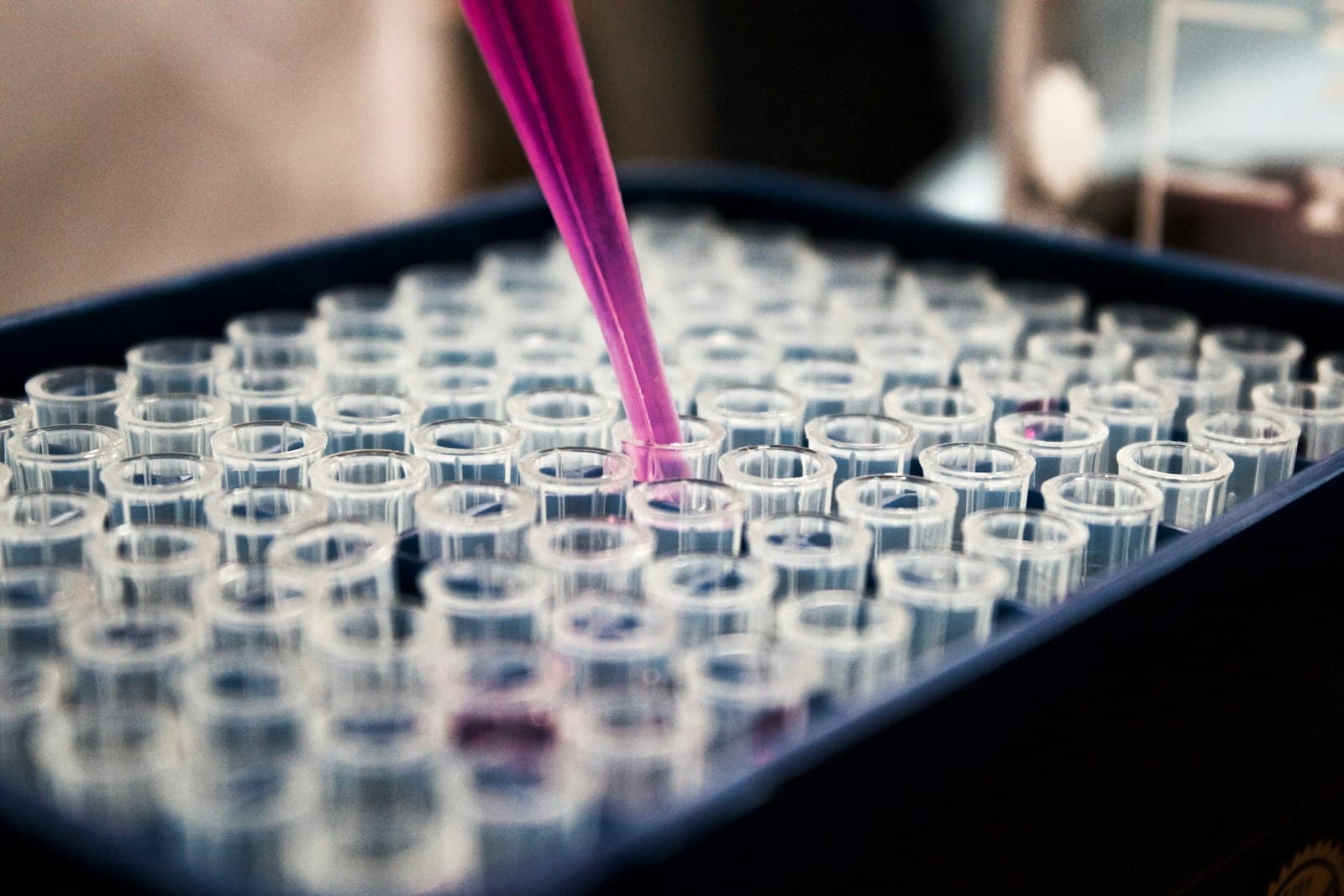
MIC 5 KIT ANALYSIS
Detect Corrosion-Causing Bacteria with a 5-Bacteria Culture Kit.
Microbiologically influenced corrosion (MIC) drives pipeline failures, cooling tower fouling, and tank integrity issues. Our MIC 5 kit profiles the five bacterial communities responsible so you can intervene before metal loss becomes a failure.
Order a MIC 5 Kit
Why It Matters
MIC is a Community Problem, Not a Single Organism
Sulfate-reducing bacteria draw the headlines, but they thrive under biofilms built by slime-formers and protected by tuberculation from iron-related bacteria.
A single-target culture misses that picture. A five-bacteria kit tells you which community is actually present and active, so you can target the right corrosion-control intervention.
Five Bacteria, One Kit
Why Profile All Five Bacterial Groups?
Sulfate-Reducing Bacteria (SRB)
Anaerobic organisms that produce hydrogen sulfide and are the canonical driver of pitting corrosion in pipelines, storage tanks, and cooling-tower fill.
Iron-Related Bacteria (IRB)
Form tubercles and biofilm that protect SRB and other corrosive organisms. Surface as orange or red staining and tuberculation.
Acid-Producing Bacteria (APB)
Generate organic acids that lower local pH at metal surfaces. Drive under-deposit corrosion and biofilm-protected attack.
Slime-Forming Bacteria (SLYM)
Produce extracellular polymeric substances that protect anaerobic communities and accelerate microbial corrosion.
Heterotrophic Aerobic Bacteria (HAB)
General aerobic population marker. Tracks overall biological activity and biofilm risk in process water.
Where Kits Are Used
From Refineries to Cooling Towers
- Oil and gas pipelines and produced-water streams
- Cooling tower bulk water and fill samples
- Above-ground storage tanks and fuel sumps
- Manufacturing, paper, mining, and food and beverage water
Where MIC 5 Kits Are Used
Pipelines and Process Water
Oil and gas pipelines, refinery process water, and produced-water streams where MIC is a known integrity hazard.
Cooling Towers and HVAC
Cooling tower bulk water and fill samples to track microbial loading driving corrosion and treatment-program effectiveness.
Storage Tanks and Sumps
Above-ground storage tanks, fuel sumps, and other low-flow water-contacting volumes prone to anaerobic colonization.
Industrial Process Water
Manufacturing, paper, mining, and food-and-beverage water systems subject to bioburden and corrosion-control programs.

The Workflow
Five Vials, Progressive Observations, Defensible Report
Each kit ships with five vials of selective media. Inoculate at the sample point, seal, and ship room temperature to our lab. Positive activity often surfaces well before the 8-day endpoint.
We report progressive observations along with the final reading so your team can begin planning interventions as soon as the data supports it.
- Five vials of selective media in every kit
- Inoculate on site, ship room temperature
- Progressive observations as positive activity appears
- Final reading at up to 8 days for definitive negatives
Frequently Asked Questions
Why Choose Air Allergen for MIC 5 Kit Analysis?
- ISO/IEC 17025:2017 accredited laboratory with documented chain of custody
- Independent analytical lab without remediation conflicts of interest
- Progressive observations that flag positive activity as soon as it appears
- Plain-language reporting for asset integrity, water-treatment, and operations teams
- Sampling-plan support so you collect samples that reflect real system conditions
Order MIC 5 Kits for Your Site
From single submissions to recurring corrosion-control monitoring, we coordinate kits, intake, and reporting.
Where We Run MIC 5 Kit Analysis
Ship samples from anywhere across the Southeast. Sample analysis is performed at our ISO/IEC 17025:2017 accredited facility in Atlanta.
- TN
Tennessee
- NC
North Carolina
- SC
South Carolina
- AL
Alabama
- GA
Georgia
Lab HQ. Atlanta
5
States served
ISO 17025:2017
Accredited lab
Same-day
Reporting available
Request Lab Service
For hospitals, pharmacies, and commercial facilities